In this article
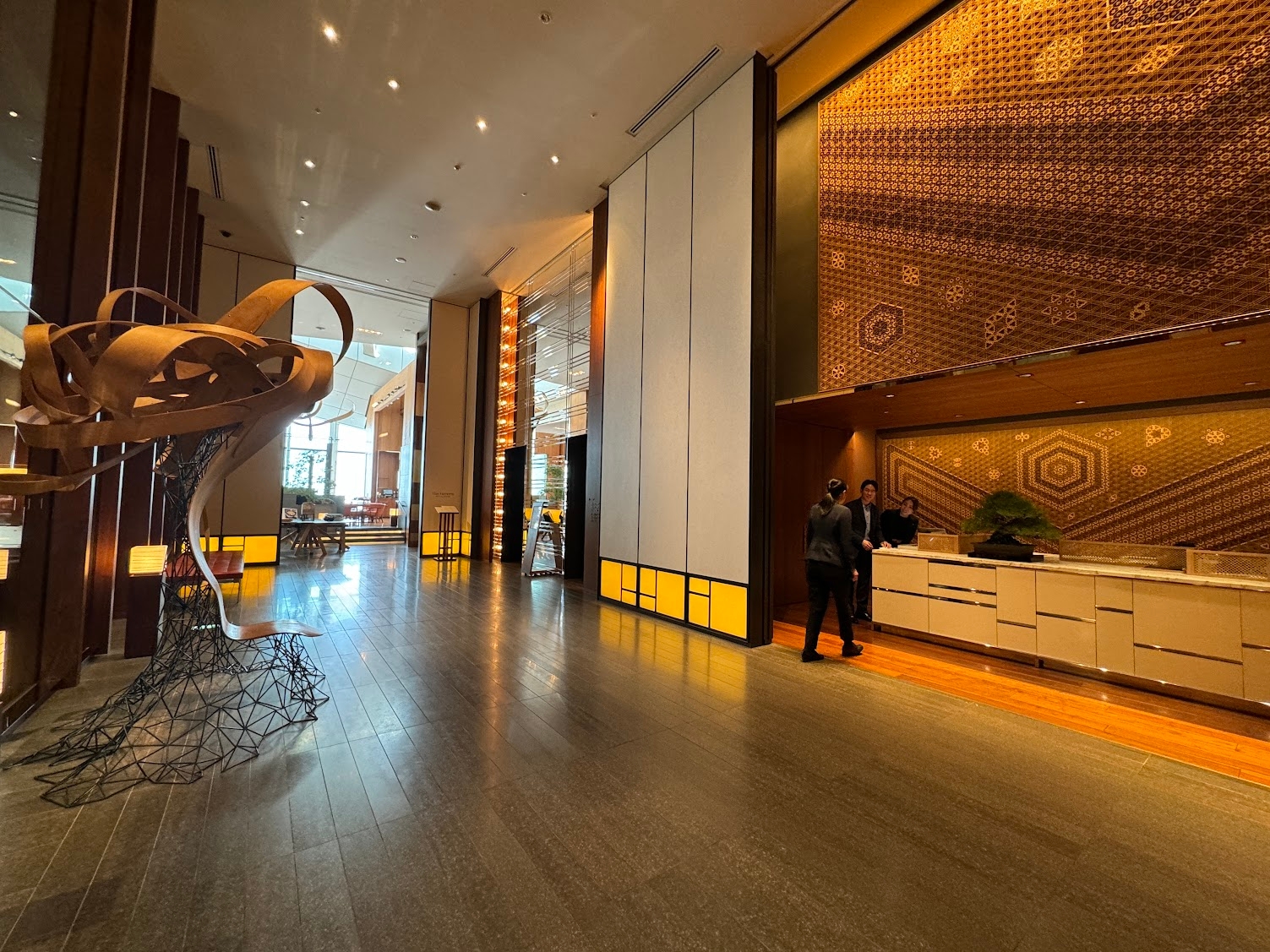
Tokyo is one of the strongest Hyatt cities in the world, but it is also easy to make the wrong hotel choice if you start with the brand instead of the neighborhood. A luxury hotel in the wrong part of Tokyo can add train transfers, taxi time, and daily friction. A less glamorous hotel in the right area can make the trip feel much easier.
The practical Hyatt shortlist depends on what you want Tokyo to be. Park Hyatt Tokyo is the nostalgic luxury icon, but renovation and reopening timing need to be checked before treating it as a normal booking option. Grand Hyatt Tokyo works well for Roppongi, restaurants, nightlife, and travelers who like a large full-service hotel. Andaz Tokyo and Hotel Toranomon Hills are strong for a more polished central stay near business districts, Ginza access, and Tokyo Station connections. Hyatt Centric Ginza is useful if shopping, dining, and central walks matter more than resort-style amenities. Hyatt House Tokyo Shibuya is appealing for longer stays and travelers who want Shibuya energy. Caption by Hyatt Kabutocho Tokyo can be a more budget-conscious central option. Hyatt Regency Tokyo Bay is a different kind of choice: useful for some Disney or bay-area plans, but usually not ideal for a normal Tokyo sightseeing trip.
The main rule is simple: do not book the “best” Hyatt on paper until you know which Tokyo you are visiting.
Quick Answer
| Traveler type / search intent | Best Hyatt pick | Why it makes sense |
|---|---|---|
| First-time Tokyo luxury trip | Park Hyatt Tokyo, if reopened and priced reasonably | Iconic Nishi-Shinjuku luxury, but renovation timing matters and Shinjuku is not perfect for every itinerary. |
| Luxury with nightlife and dining nearby | Grand Hyatt Tokyo | Roppongi Hills location, large full-service hotel feel, strong for restaurants, taxis, and easy evenings. |
| Modern luxury and city views | Andaz Tokyo Toranomon Hills | Polished high-end stay in a business district with strong transit access, especially for Ginza, Tokyo Station, and central Tokyo. |
| Newer lifestyle hotel near Toranomon/Akasaka | Hotel Toranomon Hills, The Unbound Collection by Hyatt | Useful if you want newer rooms and a central business-location base without defaulting to the biggest luxury properties. |
| Ginza shopping and dining | Hyatt Centric Ginza Tokyo | Best fit if you want to walk out into Ginza and keep the trip simple. |
| Longer stay / apartment-style setup | Hyatt House Tokyo Shibuya | Good for travelers who want Shibuya energy, more practical room layouts, and a less formal stay. |
| Budget-conscious central Tokyo Hyatt | Caption by Hyatt Kabutocho Tokyo | A practical newer option for travelers who value location and price over luxury services. |
| Traditional Hyatt Regency value | Hyatt Regency Tokyo | Can work for Shinjuku value, but compare location, room condition, renovation status, and cash rate carefully. |
| Disney / Tokyo Bay trip | Hyatt Regency Tokyo Bay | Fine for Tokyo Disney Resort or Urayasu plans; not a central Tokyo hotel. |
How to Choose a Hyatt in Tokyo
Start with your daily map. If most of your trip is Ginza, Tsukiji, Tokyo Station, Nihonbashi, teamLab-style central logistics, and easy train access, focus on Ginza, Toranomon, or Kabutocho. Hyatt Centric Ginza, Andaz Tokyo, Hotel Toranomon Hills, and Caption by Hyatt Kabutocho all solve different versions of that central-Tokyo trip.
If your trip is restaurants, nightlife, taxis, and a more international Tokyo base, Grand Hyatt Tokyo in Roppongi is often easier to understand. Rates can be high and the area is lively, but it works well for travelers who want a large hotel, strong dining access, and an area that stays useful after dark.
If you want Shibuya, fashion, youth energy, late-night food, and a room that works better for a longer stay, Hyatt House Tokyo Shibuya is the one to compare closely. It will not feel like a grand luxury hotel, but that may not matter if your real goal is to be in Shibuya and have a more livable room setup.
Be careful with Tokyo Bay. Hyatt Regency Tokyo Bay can look attractive on price or points, but it sits outside central Tokyo. It can make sense for Disney-adjacent plans or bay-area needs. That is usually a poor tradeoff if you plan to spend your days in Shinjuku, Shibuya, Ginza, Asakusa, or central Tokyo restaurants.
For Park Hyatt Tokyo, verify renovation and reopening details before you write it into a trip plan. If it is available and priced fairly, it belongs in the luxury conversation. If not, Tokyo has enough other Hyatt options that you do not need to force it.
Best Hyatt Hotels in Tokyo
Park Hyatt Tokyo

Best for: iconic Tokyo luxury, special occasions, Hyatt loyalists who specifically want the Nishi-Shinjuku classic. Skip if: you need guaranteed current availability during the renovation/reopening period, or you want the easiest location for east-side sightseeing.
Park Hyatt Tokyo is the hotel many travelers picture when they imagine a Hyatt stay in Tokyo. The Nishi-Shinjuku setting, skyline views, and long-standing luxury reputation make it the emotional pick. For a honeymoon, milestone trip, or “I finally made it to Japan” stay, it is understandable why people start here.
Location-wise, Shinjuku is powerful but not universal. It is excellent for access to Shinjuku Station, nightlife, west-side Tokyo, and many train connections. It is less ideal if your trip is mostly Ginza, Tokyo Station, Asakusa, or Disney. If you stay here, build your itinerary around west-side days rather than treating every neighborhood as equally close.
On points, Park Hyatt Tokyo is the type of property where World of Hyatt can shine when cash rates are high. On cash, compare direct Hyatt rates and Hyatt Privé-style value, if available. Do not pay a huge premium just for the name if the stay will not improve your actual trip.
Grand Hyatt Tokyo
Best for: Roppongi, restaurants, nightlife, polished full-service convenience. Skip if: you want a quieter traditional neighborhood or the most direct rail-first sightseeing base.
Grand Hyatt Tokyo is the pragmatic luxury answer for many travelers. It sits in Roppongi Hills, which makes evenings easy: restaurants, bars, shopping, art museums, and taxis are all straightforward. If you are visiting Tokyo with a partner, friends, or clients and you want the hotel to remove friction at night, Grand Hyatt Tokyo is a strong choice.
The property has the feel of a large international city hotel. That can be a positive if you want full-service predictability, multiple outlets, easier taxis, and a less precious luxury experience. It may be less exciting if you want a smaller design-forward stay or a neighborhood that feels more local.
From a rewards perspective, Grand Hyatt Tokyo is worth checking when cash rates spike. It can also make sense for elite benefits if you will use them. But again, Tokyo dining is so strong that breakfast should be treated as a convenience benefit, not the reason to anchor your whole stay.
Andaz Tokyo Toranomon Hills

Best for: modern luxury, city views, central business-district convenience. Skip if: you want late-night neighborhood energy directly outside the hotel.
Andaz Tokyo Toranomon Hills is one of the strongest high-end Hyatt choices for travelers who like modern hotels and efficient locations. Toranomon puts you near business Tokyo, with reasonable access to Ginza, Tokyo Station, Akasaka, Roppongi, and central transit lines. The street-level feel is more businesslike than romantic, but the location is strategically useful.
The hotel works well for travelers who plan to move around the city by train and taxi rather than expecting the hotel block itself to be the whole experience. If you value views, polished rooms, and a luxury stay that feels current, Andaz is often better than choosing a hotel purely because it has a famous name.
For points, this is one of the properties where award value can make sense when cash rates are high. For cash, compare any Hyatt Privé or luxury travel advisor benefits carefully against the direct rate. If the rate premium is small and you value breakfast, property credit, or upgrade priority, it may be worth it. If the premium is large, pay the normal rate or use points.
Hotel Toranomon Hills, The Unbound Collection by Hyatt

Best for: newer rooms, central Tokyo access, travelers who want a lifestyle hotel in a business-heavy area. Skip if: you need full luxury-resort style facilities or a tourist-neighborhood feel.
Hotel Toranomon Hills is useful because it gives Hyatt loyalists another central Tokyo option that is not exactly the same as the legacy luxury hotels. The Toranomon location is strong for business travelers, repeat visitors, Ginza access, and people who want to be central without staying directly in Shinjuku or Shibuya.
The Unbound Collection positioning matters: do not assume it will feel like a Park Hyatt or Andaz. Think of it as a design-conscious, modern city hotel where location and room product may matter more than a deep resort-style amenity list. For a short Tokyo stopover, meetings, or a trip where you will spend most of the day outside the hotel, that can be the right tradeoff.
Use points if the cash rate is high and award space is reasonable. Pay cash if the rate is fair and you would rather save points for a more expensive luxury stay. If trying to use advisor benefits, verify participation property by property before booking.
Hyatt Centric Ginza Tokyo
Best for: Ginza shopping, restaurants, Tokyo Station access, first-timers who want an easy polished base. Skip if: you want a large luxury hotel with extensive facilities.
Hyatt Centric Ginza Tokyo is the easiest answer for travelers whose Tokyo trip revolves around Ginza, shopping, department stores, restaurants, and easy movement around central/east Tokyo. The biggest selling point is the location: it makes a lot of trips easier, even if the hotel is not the fanciest Hyatt in the city.
Ginza is excellent for travelers who want walkable evenings, polished streets, easy taxis, and proximity to Tokyo Station. It also works well for food-focused travelers who want quick access to depachika food halls, sushi areas, coffee, bars, and upscale dining. You are not in the middle of Shibuya-style youth energy, but you are in one of Tokyo’s most convenient adult bases.
On points, Hyatt Centric Ginza can be attractive when cash rates are high. On cash, compare it against non-Hyatt hotels in the same area because Ginza has a deep hotel market. If Hyatt loyalty is the tiebreaker, great. If the Hyatt rate is far above similar alternatives, the brand premium may not be worth it.
Hyatt House Tokyo Shibuya
Best for: Shibuya base, longer stays, travelers who value practical room layouts. Skip if: you want traditional luxury service or a quiet neighborhood.
Hyatt House Tokyo Shibuya is especially interesting for travelers who want to be around Shibuya without paying luxury-hotel rates or living out of a tiny room for a longer stay. Hyatt House as a brand usually leans practical: more space, residential touches, and a less formal atmosphere.
Shibuya is a strong base for nightlife, shopping, fashion, cafes, and west-side Tokyo. It is also busy, crowded, and not always the smoothest area for travelers who want calm. If your trip includes Harajuku, Omotesando, Daikanyama, Ebisu, Shinjuku, and late evenings out, this location can be excellent. If your trip is mostly Ginza, Asakusa, or Tokyo Station, it may add unnecessary crossing of the city.
This is a property where the “best” booking may be cash or points depending on trip length and rate. For longer stays, compare weekly pricing, room type, cancellation rules, and whether the layout saves you real money on laundry, snacks, or space.
Caption by Hyatt Kabutocho Tokyo
Best for: budget-conscious Hyatt stays, central access, newer select-service energy. Skip if: you want full-service luxury, large rooms, or major elite-benefit upside.
Caption by Hyatt Kabutocho Tokyo is the kind of property that can be easy to underrate if you only sort by luxury. Kabutocho/Nihonbashi is practical for Tokyo Station, Ginza, business areas, and east-central Tokyo. For travelers who want to spend their money on food, trains, shopping, or experiences instead of hotel services, this can be a smart base.
The tradeoff is that Caption is not trying to be Park Hyatt. Expect a more casual, select-service approach. That can be exactly right if your hotel is mainly for sleeping, showering, and resetting between long days. It is less right if you are hoping for a destination hotel.
Check cash rates carefully. If the cash price is reasonable, it may not be worth burning a large pile of points. If Tokyo hotel rates are inflated and award space is available, it can still be useful.
Hyatt Regency Tokyo
Best for: Shinjuku value, traditional full-service Hyatt familiarity. Skip if: newer room product or perfect tourist convenience matters more than brand familiarity.
Hyatt Regency Tokyo can work when the rate is right and you specifically want a Shinjuku-area Hyatt. It is a more traditional full-service option, and for some travelers that familiarity is useful. But it should not be chosen automatically over newer or better-located alternatives.
Compare room condition, renovation status, transit friction, and total price. In Tokyo, an extra ten minutes to the station every morning can become annoying fast. If Hyatt Regency Tokyo is substantially cheaper than the luxury options, it can be a rational pick. If it is only slightly cheaper than a better-located or newer property, keep shopping.
Hyatt Regency Tokyo Bay
Best for: Tokyo Disney Resort, Urayasu, family trips focused on Tokyo Bay. Skip if: you are trying to sightsee central Tokyo every day.
Hyatt Regency Tokyo Bay is the property that needs the biggest warning label. It is in Urayasu/Tokyo Bay, which can be useful for Tokyo Disney Resort and bay-area plans. Most first-time visitors should not treat it as a central Tokyo base.
If your trip is three days at Disney, this can make sense. If your trip is Shibuya, Ginza, Asakusa, Shinjuku, museums, bars, and restaurants, staying here to save money can create a worse trip. The lower rate may be eaten by time, transfers, and fatigue.
Points, Cash, and Hyatt Privé Strategy
Use World of Hyatt points in Tokyo when cash rates are meaningfully high, award space lines up with your dates, and the property location matches your itinerary. Do not redeem points just because the hotel is aspirational. A perfect redemption in the wrong neighborhood is not perfect.
Pay cash when rates are reasonable, when you need a specific room type, when points availability is poor, or when a non-Hyatt hotel is clearly better for the trip. Tokyo has excellent independent and Japanese-chain hotels. Hyatt loyalty should be a tool, not a trap.
For Hyatt Privé, be conservative. Park Hyatt and Andaz are generally the types of brands where Privé can matter, while Grand Hyatt, Hyatt Regency, Hyatt Centric, Unbound Collection, Hyatt House, and Caption participation can be property-specific or limited. Confirm with a Hyatt Privé advisor before promising benefits. Compare the Privé rate against the member rate you would book, then value breakfast, property credit, and upgrade priority realistically.
Common Mistakes
- Choosing Tokyo Bay for a Tokyo city trip. Urayasu is useful for Disney, not for a normal central Tokyo itinerary.
- Overvaluing hotel breakfast. Tokyo is a city where local breakfast, bakeries, convenience stores, and coffee can be part of the trip.
- Ignoring station friction. A hotel can look central on a map and still be annoying if the station walk or transfer pattern is bad.
- Assuming luxury equals best. For some trips, Hyatt Centric Ginza, Hyatt House Shibuya, or Caption Kabutocho may create a better itinerary than a more expensive hotel.
FAQ
What is the best Hyatt in Tokyo for first-timers?
For many first-timers, Hyatt Centric Ginza, Grand Hyatt Tokyo, Andaz Tokyo, or Hyatt House Tokyo Shibuya will be easier than chasing a single universal “best.” Choose Ginza for polished central convenience, Roppongi for dining and nightlife, Toranomon for modern central luxury, and Shibuya for west-side energy.
Is Hyatt Regency Tokyo Bay good for Tokyo sightseeing?
Not usually. It is better for Tokyo Disney Resort and Urayasu. For central Tokyo sightseeing, the commute can make the trip worse.
Should I use Hyatt points or pay cash in Tokyo?
Use points when cash rates are high and the hotel improves the trip. Pay cash when rates are fair or when a non-Hyatt hotel is better located.
Final Take
For Tokyo, start with Park Hyatt Tokyo; Grand Hyatt Tokyo; and Andaz Tokyo Toranomon Hills when you want a World of Hyatt stay, but only keep the booking if the location works for the actual itinerary. Use points or certificates when the cash rate is high and the room type, taxes, fees, and cancellation rules still look reasonable. If the award pushes you away from the neighborhoods you will use every day, pay cash or book another program instead.